Budget and prices
What a laptop really costs per year in Ireland
Price divided by years kept, plus electricity at the SEAI household rate, VAT inside the shelf price and what Revenue charges on an import from outside the EU.
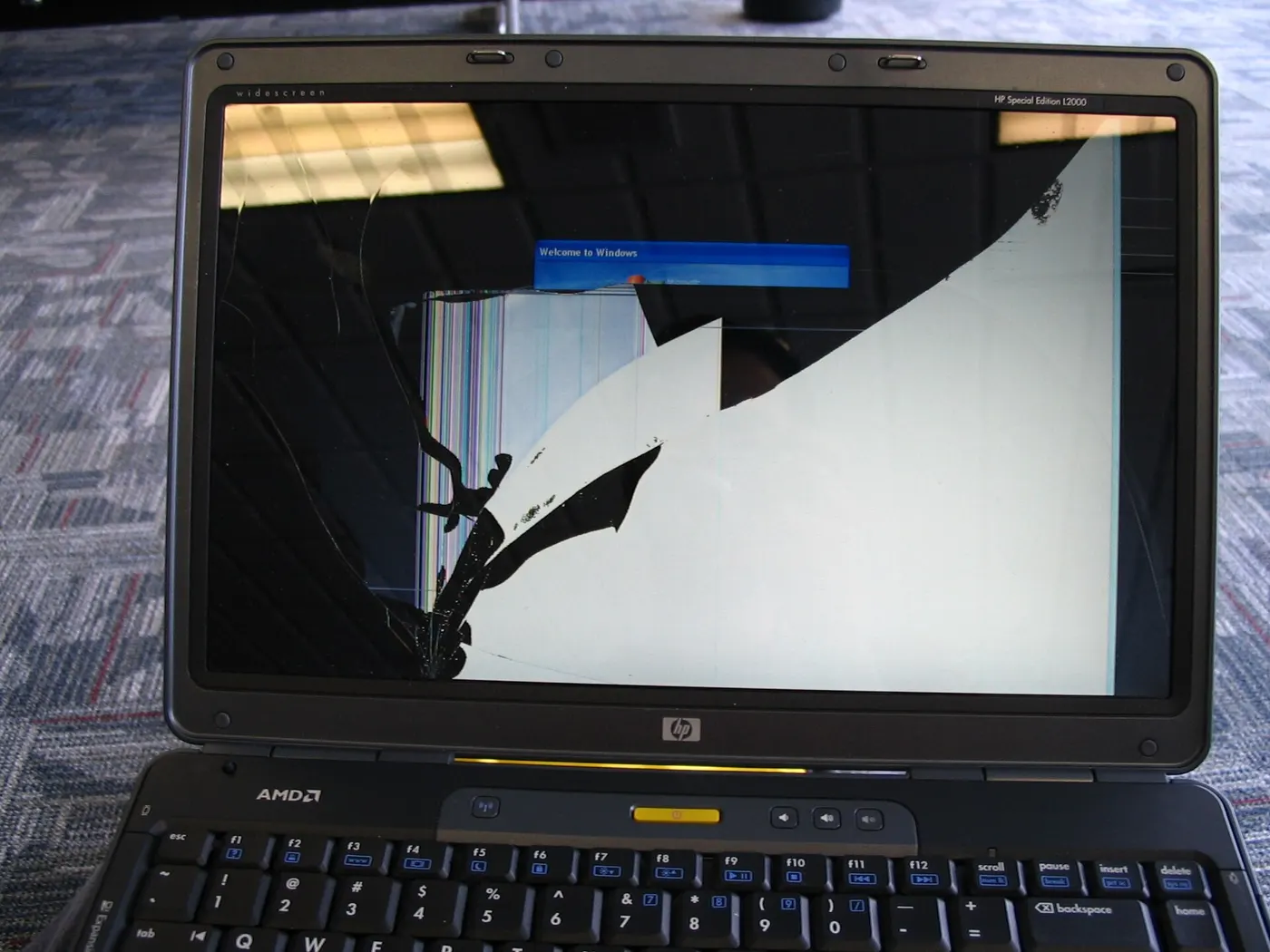
A laptop's price is a single number that describes a purchase, not an ongoing cost. What it actually costs you is that number divided by the years you keep it, plus the electricity it draws, plus whatever tax and carriage you paid to get it into the country.
This guide works through each of those in order, using the published Irish figures rather than remembered ones. Prices for machines are examples used to show arithmetic; the electricity price, the VAT rate and the customs figures are taken from the sources named at the end. No price feed is connected to this site.
Price divided by years kept
Start with the division. An example €900 laptop kept 5 years costs €180 a year. The same machine replaced after 3 years costs €300 a year, which is two-thirds more for identical hardware. Nothing about the specification changed; only how long you kept it.
This is why the cheap option is often the expensive one. An example €600 machine kept 3 years costs €200 a year, which is more than the €900 machine costs at 5 years. If the €600 machine has soldered memory that runs out in year three, the shorter life is not bad luck; it was in the specification at purchase.
Resale, where it exists, comes off the top. If the €900 machine sells for €200 after 5 years, the cost to you is €700 over 5 years, which is €140 a year. Machines with a clean battery, an intact screen and a current operating system sell; machines without those three generally do not.
| Example price | Kept 3 years | Kept 5 years | Kept 7 years |
|---|---|---|---|
| €600 | €200 | €120 | €86 |
| €900 | €300 | €180 | €129 |
| €1,400 | €467 | €280 | €200 |
Each cell is the price divided by the number of years in the column heading, rounded to the nearest euro, with no resale subtracted. The cost-per-year calculator on this site takes a resale figure as well.
Electricity, at the price Ireland actually pays
SEAI publishes a household electricity price series every 6 months in line with EU reporting rules. For the second half of 2025 it gives Ireland 38.4 cent per kWh, against 31.0 cent for the euro area and 29.4 cent for the EU-27. Ireland is the dearer end of that comparison, which makes the running line worth computing rather than waving away.
A laptop drawing an average 30 W for 8 hours a day across 250 working days uses 60 kWh a year, which is €23.04 at that price. Add an external monitor and the average draw becomes about 55 W, giving 110 kWh and €42.24. A desktop tower with a monitor at an average 120 W uses 240 kWh and costs €92.16.
The case that costs real money is leaving a desktop on continuously. At an average 60 W for 24 hours a day across 365 days, the machine uses 525.6 kWh a year, which is €201.83. That single habit costs more than twice what the same machine costs when it is switched off outside working hours.
| Pattern | Average draw | Hours and days | kWh a year | Cost a year |
|---|---|---|---|---|
| Laptop at a desk | 30 W | 8 hours, 250 days | 60 kWh | €23.04 |
| Laptop and external monitor | 55 W | 8 hours, 250 days | 110 kWh | €42.24 |
| Desktop and monitor, working hours | 120 W | 8 hours, 250 days | 240 kWh | €92.16 |
| Desktop left on continuously | 60 W | 24 hours, 365 days | 526 kWh | €201.83 |
Average draw is an assumption for each pattern, not a measurement of any product. A plug-in meter will usually read lower than rated power, because machines idle most of the time. Put your own figures into the running-energy calculator.

VAT is already inside an Irish shelf price
Consumer prices in Ireland include VAT, and Revenue's worked examples for goods bought from outside the EU apply the standard rate of 23% to computer equipment. On an example €900 shelf price that means €168.29 of what you hand over is VAT: €900 divided by 1.23 is €731.71, and the difference is €168.29.
The practical use of this is comparison. A quoted price excluding VAT and an Irish shelf price are not the same kind of number, and a business listing showing €731.71 plus VAT is showing the same €900. Always carry the tax-inclusive figure into a comparison.
It also sets the floor on what any import can save you. Goods brought in from outside the EU attract Irish VAT anyway, so the tax is not the part of the price that moves; only the pre-tax price and the carriage do.
- An example €900 Irish shelf price is €731.71 net plus €168.29 of VAT at 23%
- An example €600 shelf price is €487.80 net plus €112.20 of VAT
- A quote of "€731.71 plus VAT" and a shelf price of €900 are the same amount of money
- VAT applies to goods imported from outside the EU as well, so importing does not avoid it
- Compare tax-inclusive totals only, at every seller
What Revenue charges on a machine from outside the EU
Revenue publishes a worked example for exactly this purchase. A laptop with an intrinsic value over €150 is taken at €301 for the goods plus €33 for transport, giving a customs value of €334. Customs duty at a rate of 0% is €0.00, and VAT at 23% of €334 is €76.82. The customs value for goods over €150 is the cost of the goods plus specific costs such as transport, including postage, and any insurance.
Below that threshold, Revenue states that a €3 customs duty charge per item applies to most e-commerce packages valued at €150 or below coming into Ireland from outside the EU, effective from 1 July 2026. That is a flat charge rather than a percentage, so it bites hardest on small, cheap items such as accessories and spare chargers.
Apply the same method to a dearer machine and the arithmetic is unchanged. An example €600 laptop with €40 of shipping gives a customs value of €640; VAT at 23% is €147.20, so the landed cost before any carrier handling fee is €787.20. Put all four lines into the landed-cost calculator before comparing that with an Irish shelf price, because the Irish price already contains its tax.
| Line | Revenue's published example | Same method, €600 machine |
|---|---|---|
| Goods | €301.00 | €600.00 |
| Transport | €33.00 | €40.00 |
| Customs value | €334.00 | €640.00 |
| Customs duty | €0.00 at a rate of 0% | depends on the commodity code |
| VAT at 23% | €76.82 | €147.20 |
| Landed cost before carrier fees | €410.82 | €787.20 |
The first column is Revenue's own worked example for a laptop over €150. The second applies the same arithmetic to an illustrative figure. Carrier handling fees are charged separately and are not in either column.
Date every price, because the level moves
The Central Statistics Office put annual inflation at 4.1% for September 2026 on the Consumer Price Index, with the Harmonised Index of Consumer Prices at 3.8%. On the CPI rate, an example €900 noted twelve months ago corresponds to about €937 today.
That is enough to invalidate a comparison made from memory, and it is why every example in this guide carries the word example and every sourced figure carries a date. A price remembered from last year is not evidence about this year, and treating it as one is how a shopper becomes certain about something that is no longer true.
Write the date beside any figure you record. A note that reads "€900, checked 2026-11-03" stays useful for months; one that reads "about €900" quietly stops being true and gives no warning when it does.
Before you buy
- Divide each candidate machine's price by the years you realistically expect to keep it
- Subtract a realistic resale figure only for machines you will keep in sellable condition
- Add the running electricity at 38.4 cent per kWh for your own hours
- Compare tax-inclusive totals, remembering an Irish shelf price already contains 23% VAT
- For an import, add goods, transport, VAT on the customs value and the carrier handling fee
- Remember the €3 per-item customs charge on packages valued at €150 or below
- Write the date beside every price you record and treat anything a year old as stale
Questions readers ask
- Is it cheaper to buy a laptop from outside the EU?
- Less often than it looks. Irish VAT at 23% applies to the customs value either way, and that value includes transport and insurance as well as the goods. On Revenue's own example a €301 laptop with €33 of transport lands at €410.82 before any carrier handling fee. Compare that total with an Irish shelf price, which already contains its tax.
- How much does leaving a computer on overnight actually cost?
- On the figures in this guide, a desktop averaging 60 W left on continuously uses 526 kWh a year and costs €201.83 at the SEAI household price of 38.4 cent per kWh. The same machine used 8 hours a day over 250 days costs €92.16. Shutting down outside working hours saves roughly €110 a year.
- Should I count the monitor and accessories in the cost per year?
- Yes, and divide them over their own lives rather than the laptop's. A monitor commonly outlasts two laptops, so an example €250 monitor over 10 years is €25 a year even if the computer in front of it changes twice. Keeping them in separate columns stops a monitor purchase from distorting a laptop comparison.
- Does a longer warranty change the cost per year?
- It changes the risk rather than the arithmetic. Under the Consumer Rights Act 2022 your statutory right to a remedy already runs up to 6 years from purchase, so an extended commercial guarantee is buying convenience and speed rather than a right you lack. Price it against the chance of a repair rather than against the machine's value.
- Why is Irish electricity more expensive than the EU average?
- The SEAI series shows the gap rather than explaining it: 38.4 cent per kWh for Ireland in the second half of 2025, against 31.0 cent for the euro area and 29.4 cent for the EU-27. For a buyer the consequence is what matters, which is that running costs weigh more heavily in Ireland than a European average would suggest.
Sources
- Revenue — Buying goods online from outside the EU: €150 threshold, €3 per-item charge, worked laptop example with VAT at 23% — checked 2026-11-03
- SEAI — Household electricity prices, Ireland, euro area and EU-27 (38.4 cent per kWh, 2025 second half) — checked 2026-11-03
- Central Statistics Office — Consumer Price Index (annual inflation 4.1%, September 2026; HICP 3.8%) — checked 2026-11-03
Advertising is not enabled on this site yet. When it is, ads will be labelled and kept visually separate from the guides.